Mt Fuji from Kamakura and Enoshima: Where and When to Look
Short answer: Yes, you can see Mt Fuji from Kamakura and Enoshima on clear days, but only from certain spots. Japan’s Ministry of Land, Infrastructure, Transport and Tourism (MLIT) says Fuji is often seen well from Inamuragasaki on windy days from early December to late February. From there, Fuji sits behind Shichirigahama beach and Enoshima. Other official viewpoints are the Enoshima Sea Candle at sunset, Shonan Coast Park by the Enoshima bridge, a few hillside temple lookouts, and Shonan-Fukasawa Station on the monorail. Kamakura Station, Yuigahama beach and the Great Buddha are not on any official viewpoint list.
This guide uses only official sources for where Fuji can be seen. They are the Kamakura City Tourism Association’s “Viewing Mt. Fuji from Kamakura” page (six spots), MLIT’s “Kanto Fujimi 100” list and the Enoshima Sea Candle’s own site. Each spot below includes how to get there, what it costs and when it closes, so you can fit a Fuji stop into a Kamakura or Enoshima day.
Nobody can promise a view on a given day. Clouds and haze hide Fuji in every season, and the Kamakura City Tourism Association notes that along the coast the ridgeline is often only faintly visible. Check the live camera in the section on checking on the day before you set out.
Coast spots along the Enoden
The coast between Kamakura and Enoshima is where most visitors look for Fuji. The Enoden runs right along it. For how to ride and pay, see Enoden guide.
Inamuragasaki Park
This small cape park is the one spot on both official lists. The Kamakura City Tourism Association says the view takes in Shichirigahama beach, Enoshima and Mt Fuji. MLIT describes the coastline, Fuji and the hills that run down to the sea, and says the park is popular with photographers for Fuji, Enoshima and Shichirigahama in one frame. The cape is also a national historic site.
- Getting there: Enoden to Inamuragasaki Station, 10 minutes and 220 yen from Kamakura, or 12 minutes and 220 yen from Enoshima. The park is on a hill across Route 134 from the beach. Kamakura City and the Kamakura City Tourism Association both give the walk as about 5 minutes (Kamakura City: turn left out of the ticket gate, along Route 134); MLIT says 8 minutes.
- When: MLIT’s only seasonal statement for this area is about this park: Fuji shows well on windy days from early December to late February.
- Facilities: Kamakura City’s park pages list a gazebo, toilets and benches, with a paid prefectural car park nearby. They don’t list opening hours or an admission fee.
Koshigoe: Myotenji and the Kamakura Fujimi Cemetery hill
The Kamakura City Tourism Association lists Myotenji temple (spelled “Myodenji” on its English page), 3 minutes on foot from Enoden Koshigoe Station. Behind the main hall, a hill in the Kamakura Fujimi Cemetery looks out over the Koshigoe townscape and Enoshima. The association calls it a little-known Fuji spot where the mountain is clearly visible in good weather, and says it’s also good at dusk.
- Getting there: Enoden to Koshigoe, 22 minutes and 260 yen from Kamakura, or 2 minutes and 200 yen from Enoshima.
- Also: the temple’s own site gives an 8-minute walk from Shonan Monorail Shonan-Enoshima Station.
- Note: the hill is part of a working cemetery, and neither the temple’s site nor the tourism association’s page lists visiting hours for viewers. Keep your voice down and stay on the paths.
Shichirigahama beach
Shichirigahama beach is the long beach between the two spots above. The tourism association’s page frames it as the view from Inamuragasaki, with Enoshima and Fuji behind it, and says that along the coast Fuji’s ridgeline often floats faintly in the distance. Kamakura City’s list of 100 landscapes names the beach near Yukiai bridge, alongside Inamuragasaki park, as a place to see the coastline, Enoshima and Fuji together. Kanagawa’s official tourism site highlights Fuji’s silhouette at dusk from Shichirigahama and gives a 2-minute walk from Shichirigahama Station on the Enoden. For a full Kamakura-to-Enoshima day that passes all of this, see the Kamakura and Enoshima day trip itinerary.
Enoshima spots
Enoshima Sea Candle observation deck
The Enoshima Sea Candle is the lighthouse-observation tower at the top of the island, inside the Samuel Cocking Garden. Its official site says the outdoor deck offers a sunset view of the Shonan sea and Mt Fuji, and that at dusk you can see Fuji and the setting sun together. The glass-walled indoor deck is 41.75 m up (101.56 m above sea level), with the outdoor deck above it.
- Cost: 800 yen for adults for the tower.
- Hours: garden and tower 9:00 a.m. to 8:00 p.m., last entry 7:30 p.m.
- Getting there: Enoden Enoshima Station is 24 minutes and 260 yen from Kamakura. The walk to the top, the Escar escalators and set tickets are covered in Enoshima half-day itinerary.
On event evenings the garden charges its own entry fee after 5:00 p.m. For the winter illumination, night fees and the last trains back, see Enoshima at night.
Klook sells a digital ticket for the Sea Candle and the Escar. One version adds the Odakyu ride from Shinjuku. Check which version is on sale for your date.
Shonan Coast Park (Katase and Kugenuma beaches)
Across the bridge on the mainland, MLIT lists Kanagawa Prefecture’s Shonan Coast Park as a separate Fuji viewpoint. The park runs about 2 km along the shore and includes the Enoshima Aquarium. MLIT says the seaside paths look across Sagami Bay with Fuji behind it, and that at dusk Fuji’s outline shows against the red sky.
- Getting there (MLIT): 5 minutes on foot from Odakyu Katase-Enoshima Station, 10 minutes from Odakyu Kugenuma-Kaigan Station, or 10 minutes from Enoden Shonankaigankoen Station.
- Fees: MLIT’s listing doesn’t mention an admission fee.
Hill spots in Kamakura
These lookouts sit above the town, so Fuji appears beyond the rooftops and the sea. Most are inside temple grounds with daytime hours. In winter they close before sunset, so plan them for the morning or early afternoon.
Komyoji back hill (Mt Tensho viewing platform)
The Kamakura City Tourism Association says this spot shows Fuji over the roof of Komyoji’s Sanmon gate, with the sea and the Inamuragasaki cape. After the Sanmon gate, take the path between the kindergarten and the Enmei Jizo statue toward the main hall. The viewing platform is up the path that climbs Mt Tensho.
- Getting there: bus from JR Kamakura Station toward JR Zushi Station, about 10 minutes, to the Komyoji stop.
- Hours (Kamakura City Tourism Association): 7:00 a.m. to 4:00 p.m. from October 15 to March 31, and 6:00 a.m. to 5:00 p.m. from April 1 to October 14.
- Cost: by donation (no set fee).
Ankokuronji Fujimidai
Ankokuronji is a Nichiren temple in the Omachi area. Steep stone steps beside the Kumaoden hall climb to the Fujimidai lookout. The Kamakura City Tourism Association says the view takes in the seaside townscape, Inamuragasaki and Fuji. The temple’s own site says a loop from the main hall to the Fujimidai, the bell tower and the Nanmenkutsu cave and back takes about 15 minutes.
- Getting there: bus from the east exit of Kamakura Station to the Nagoe stop, then 3 minutes on foot.
- Hours: 9:00 a.m. to 4:30 p.m. Closed on Mondays, except on national holidays and during the spring and autumn equinox weeks.
- Cost: 100 yen, cash only.
Shojoken observation deck above Kenchoji
This is the hardest climb on the list. The Kamakura City Tourism Association says the Shojoken deck, near a peak above Kenchoji in Kita-Kamakura, looks from Sagami Bay to Mt Fuji. You go up through Hansobo, the shrine at the back of the temple grounds, climb a staircase of about 250 steps to the Fujimidai, then take one more stairway to the deck. The association puts the whole route at about 30 minutes from Kenchoji’s Somon gate, even for experienced walkers, all on steep stone steps.
- Getting there: about 15 minutes on foot from JR Kita-Kamakura Station, or 5 minutes by Enoden bus toward Kamakura Station to the Kenchoji stop.
- Hours: 8:30 a.m. to 4:30 p.m.
- Cost: 500 yen for adults and 200 yen for elementary and junior high students, cash only. Kenchoji asks hikers who enter through the grounds to pay too.
- Rules: tripods and monopods aren’t allowed in the temple grounds.
Jomyoji Ryokuchi
MLIT’s second Kamakura viewpoint is this green space on the hills in east Kamakura. MLIT says it looks over old Kamakura and its ring of hills to Mt Fuji, Sagami Bay, Hakone, Izu and the Tanzawa mountains. It sits within the Kamakura-Zushi Highland housing area and also works as an extension of the Kinubariyama hiking trail.
- Getting there (MLIT): bus from Kamakura Station on the Highland loop to the Yuhidai Koen stop, then 5 minutes on foot.
- Hours and fees: MLIT’s listing doesn’t give opening hours or an admission fee.
Shonan-Fukasawa Station at sunset
The sixth spot on the Kamakura City Tourism Association’s list is a monorail station. The Shonan Monorail runs between Ofuna and Shonan-Enoshima with the cars hanging below the track, high above the streets. The association recommends Shonan-Fukasawa Station for Fuji’s silhouette in the “magic hour” between sunset and dark. It adds that there are many places along the line, from the station and from the train windows, to see Fuji, especially at dusk.
- Getting there: 240 yen from Ofuna (JR transfer) or 260 yen from Shonan-Enoshima, adult fares from the monorail’s fare table.
- Tip: this fits the end of an Enoshima day. Ride from Shonan-Enoshima toward Ofuna around sunset, then change to JR at Ofuna for Tokyo. Shonan Monorail gives the whole Ofuna–Enoshima ride as about 14 minutes.
When to go
The official sources don’t name a single best month for Fuji from Kamakura, so neither do we. Here’s what they do say.
- MLIT (Kamakura): from Inamuragasaki, Fuji is often seen well on windy days from early December to late February. This is the only official seasonal statement for the Kamakura and Enoshima area.
- Fuji City data (not Kamakura): Fuji City in Shizuoka has recorded Fuji’s visibility at 8:00 a.m. every day for 35 years. Its 2025 report says the mountain is seen more often from autumn to spring and less often in summer. This was measured near the foot of the mountain, so treat it as a general seasonal pattern, not a figure for Kamakura or Enoshima.
- Time of day: the Sea Candle, Shonan Coast Park, Myotenji and Shonan-Fukasawa are all described as dusk or sunset spots. The temple lookouts close by 4:00–4:30 p.m., so they’re daytime stops.
Sunset times for Yokohama, the nearest city in the National Astronomical Observatory of Japan (NAOJ) tables, for the coming winter:
| Month | Sunset (Yokohama) |
|---|---|
| December 2026 | 4:28–4:38 p.m. |
| January 2027 | 4:39–5:08 p.m. |
| February 2027 | 5:09–5:35 p.m. |
A practical winter plan is the hill temples in the morning, the coast around midday, and Enoshima or the monorail for sunset. How that early sunset changes which lookouts still work is in Mt Fuji from Kamakura in winter. For what else Kamakura offers in the cooler months, see Kamakura in autumn and winter.
Checking on the day
Shonan Monorail runs the Fuji View Live Camera, a fixed camera on the roof terrace of Shonan-Enoshima Station (the 5th floor, where the ticket gates are). It posts a still image every 10 minutes, viewable from 4:00 a.m. to 8:00 p.m., and you can step back through earlier images. As of the evening of October 9, 2026, it was updating with same-day images.
How to use it:
- Open the Fuji View Live Camera in the morning before you leave Tokyo.
- If Fuji is clear, put a coast or hill spot early in your day. If it’s hazy, keep the Sea Candle or Shonan Coast Park for later and check again.
- Remember the camera shows one view from one spot. Conditions at Kamakura’s hill temples can differ.
We don’t list unofficial or private webcams.
Diamond Fuji dates
“Diamond Fuji” is when the sun sets exactly on Fuji’s summit. MLIT lists three viewpoints in this area, all at sunset. MLIT calls the dates approximate: they can shift by a day or two depending on the spot and the leap-year cycle, and weather can stop it altogether.
| Viewpoint | Spring (approx.) | Autumn (approx.) |
|---|---|---|
| Inamuragasaki Park | April 4–5 | September 7–8 |
| Jomyoji Ryokuchi | April 1–2 | September 10–11 |
| Shonan Coast Park | April 3–4 | September 8–9 |
For reference, NAOJ gives Yokohama’s sunset as 6:02–6:06 p.m. on April 1–5, 2027, and 6:01–5:55 p.m. on September 7–11, 2027. Arrive well ahead of that. None of these dates fall in winter, and MLIT doesn’t list the Sea Candle for Diamond Fuji.
Frequently asked questions
Can you see Mt Fuji from Kamakura?
Yes, on clear days, from specific viewpoints. The Kamakura City Tourism Association lists six, including Inamuragasaki Park on the coast and hill spots at Komyoji, Ankokuronji and above Kenchoji. MLIT says Fuji is often seen well from Inamuragasaki on windy days from early December to late February.
Can you see Mt Fuji from Kamakura Station, Yuigahama beach or the Great Buddha?
None of them appear on the official viewpoint lists from the Kamakura City Tourism Association or MLIT, so we can’t point you there for Fuji. For a coast view, take the Enoden 10 minutes from Kamakura to Inamuragasaki (220 yen) and walk to Inamuragasaki Park.
Can you see Mt Fuji from Enoshima?
The Enoshima Sea Candle’s official site says its outdoor deck looks over the Shonan sea toward Mt Fuji at sunset. MLIT also lists Shonan Coast Park, on the mainland shore by the Enoshima bridge, where Fuji’s outline shows at dusk behind Sagami Bay.
Can you see Mt Fuji from Kamakura in summer?
Sometimes, but the official sources for Kamakura don’t give a summer statement. The only long-term official record is Fuji City’s own (Fuji City data, measured in Shizuoka, not in Kamakura): its 8 a.m. observations see the mountain less often in summer and more often from autumn to spring.
When is Diamond Fuji in Kamakura and Enoshima?
MLIT lists sunset Diamond Fuji at Inamuragasaki on April 4–5 and September 7–8, at Jomyoji Ryokuchi on April 1–2 and September 10–11, and at Shonan Coast Park on April 3–4 and September 8–9. MLIT calls these dates approximate: they can shift by a day or two, and weather can stop it.
Is there a live camera for Mt Fuji near Enoshima?
Yes. Shonan Monorail runs the Fuji View Live Camera on the roof terrace of Shonan-Enoshima Station. It posts a still every 10 minutes, viewable from 4:00 a.m. to 8:00 p.m. As of October 9, 2026, it was updating.
Related guides
-
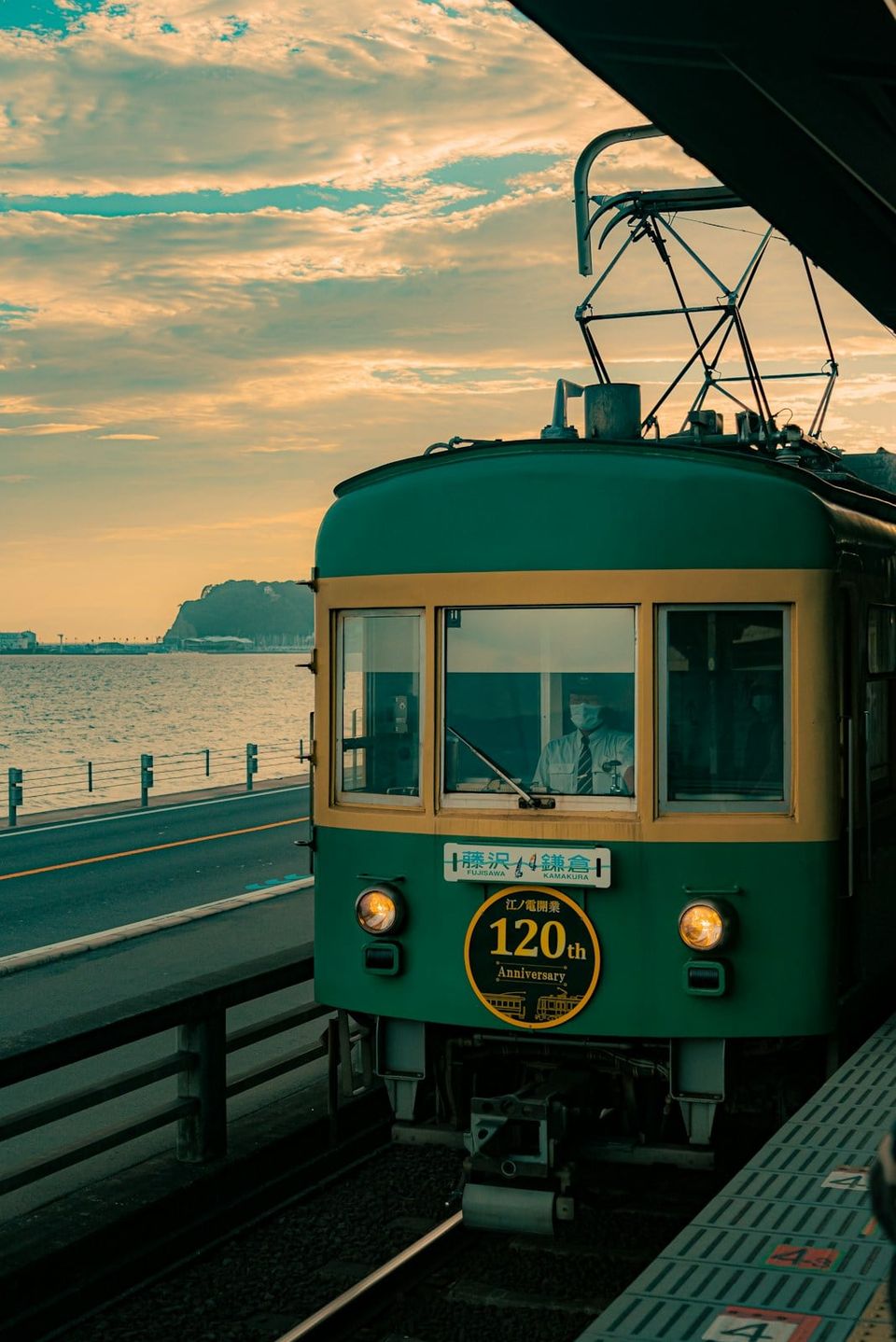
Photo: Tsukada Kazuhiro / Unsplash (Unsplash License), displayed with a crop Kamakura and Enoshima Day Trip Itinerary from Tokyo (One-Day Plan)
How to see Kamakura's Great Buddha, Hasedera and Enoshima in one day from Tokyo: the order that works, which pass to buy, and what it costs.
-
Photo: 延岡 / Wikimedia Commons (CC BY-SA 4.0), displayed with a crop How to Get from Tokyo to Kamakura: JR vs Odakyu, Time and Fare
The simplest ways to reach Kamakura from Tokyo Station, Shinagawa, Shinjuku and Shibuya, with real fares, travel times, and when the slower Odakyu route is the smarter pick.
-
Photo: Nesnad / Wikimedia Commons (CC BY 4.0), displayed with a crop Enoshima-Kamakura Freepass vs Enoden Pass vs Suica: Which Saves Money?
Real fare math for a Kamakura and Enoshima day trip: when the 1,640-yen Freepass pays off, when the 800-yen Enoden pass does, and when plain Suica is cheaper.
-
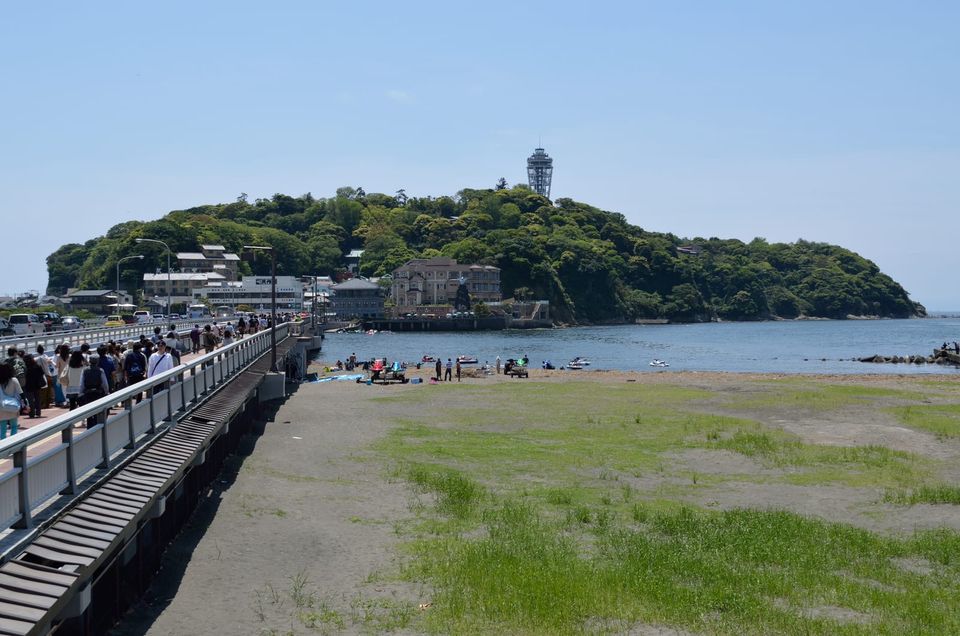
Photo: AMANO Jun-ichi / Wikimedia Commons (CC BY 3.0), displayed with a crop Enoshima Half-Day Itinerary: Shrine, Sea Candle, Iwaya Caves
A half day on Enoshima: the route from the station to the shrine, Sea Candle and Iwaya Caves, with official hours, last entry, fees, Escar prices and trains.
-
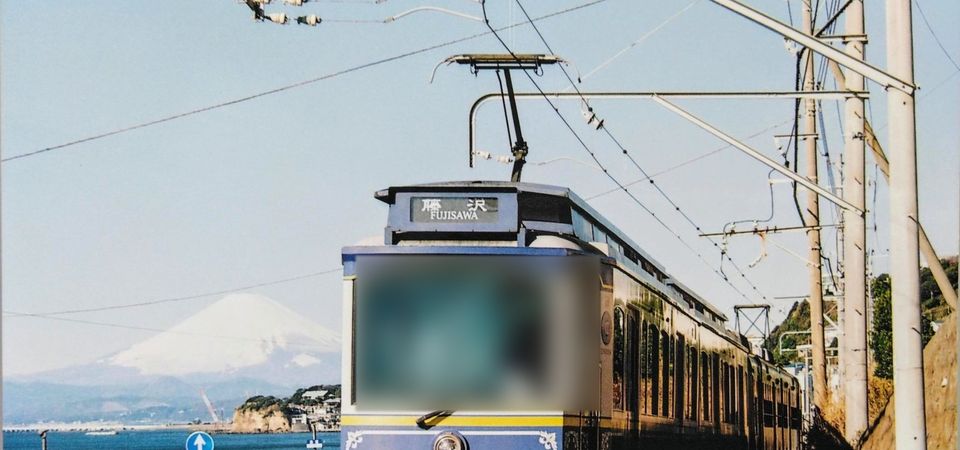
Photo: Kirin7739 / Wikimedia Commons (CC BY 4.0), cropped; displayed with a crop Enoden: Suica Works, Fares 200-310 Yen, No JR Pass
Yes, Suica works on the Enoden. Adult fares are 200, 220, 260 or 310 yen. The JR Pass does not. First train 5:20 a.m.; last full line 11:05 p.m.
-
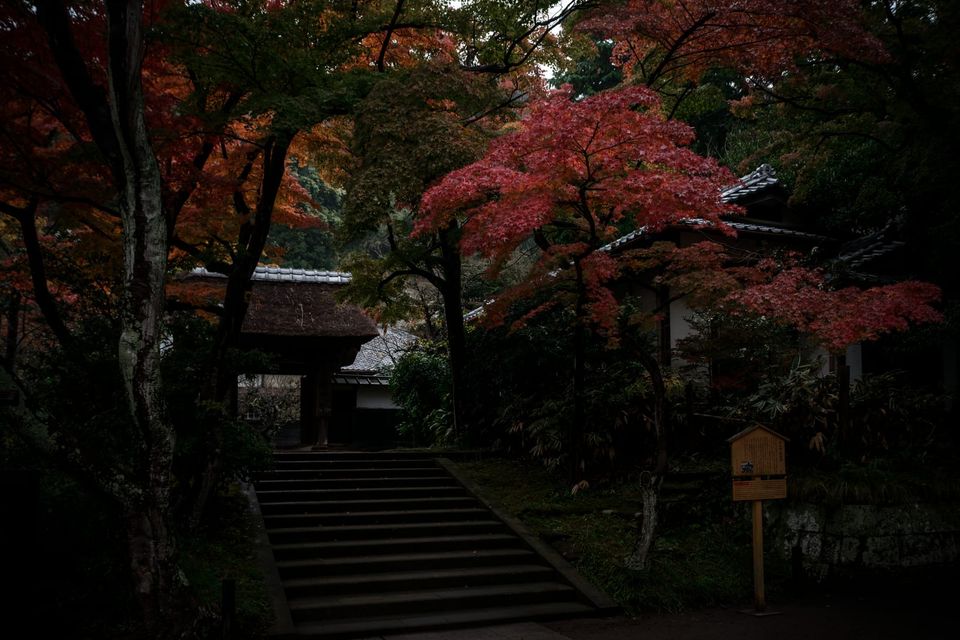
Photo: Artemas Liu / Wikimedia Commons (CC BY 2.0), displayed with a crop Kamakura in Autumn and Winter: Leaf Timing, Hours, New Year
When Kamakura's autumn leaves usually peak, which temples to visit by area with winter hours and fees, last year's night openings, and New Year crowd rules.
-
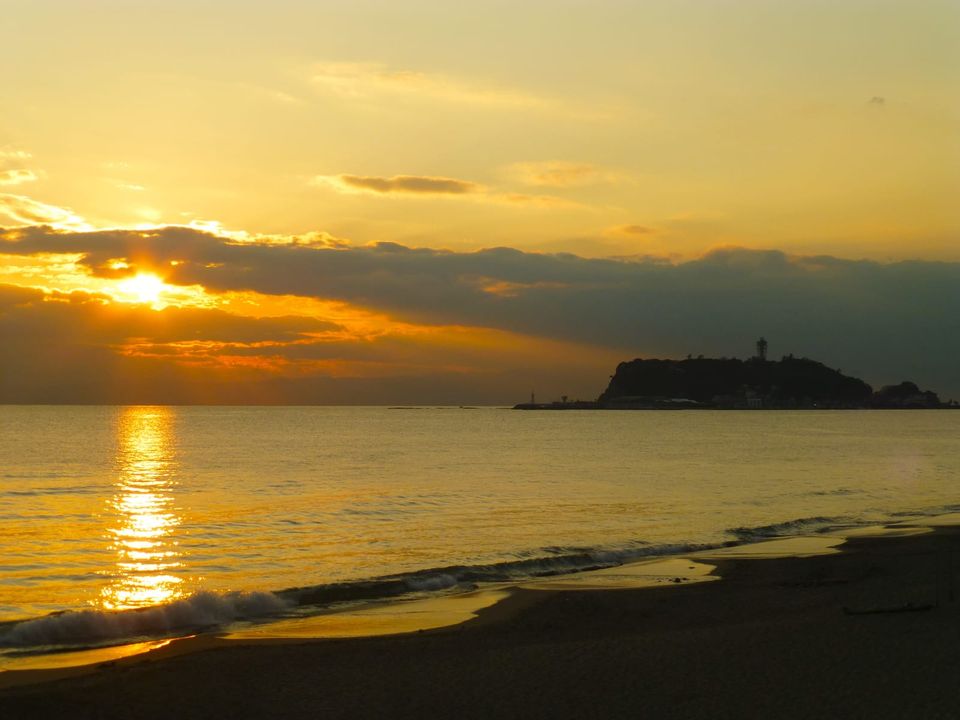
Photo: Nesnad / Wikimedia Commons (CC BY 3.0), displayed with a crop Enoshima at Night: Winter Illumination, Sunset, Last Trains
Enoshima's Shonan no Hoseki illumination runs Dec 1, 2026 to Feb 28, 2027. What's open after dark, night fees, sunset times and last trains back to Tokyo.
-
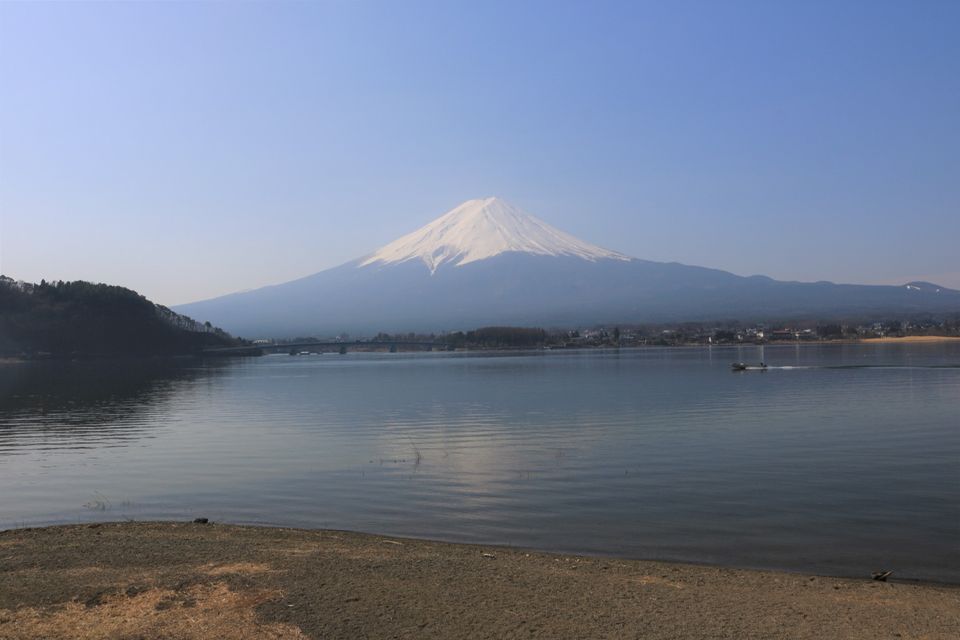
Photo: Alpsdake / Wikimedia Commons (CC BY-SA 4.0), displayed with a crop Hakone vs Kawaguchiko for Mt Fuji: Which Trip from Tokyo?
Hakone or Kawaguchiko for Mt Fuji views? Official viewpoints, travel time and fares from Shinjuku, onsen, winter notes, and whether you can do both.
-
Photo: 663highland / Wikimedia Commons (CC BY-SA 4.0), displayed with a crop Tokyo to Kawaguchiko: Fuji Excursion Train vs Highway Bus
How to get from Tokyo to Lake Kawaguchiko: the Fuji Excursion train (4,200 yen, about 2 hours) vs the Shinjuku highway bus (from 2,000 yen), with timetables, booking and JR Pass rules.
-
Photo: Supanut Arunoprayote / Wikimedia Commons (CC BY 4.0), displayed with a crop Kawaguchiko Day Trip Itinerary from Tokyo: Chureito Pagoda, Ropeway and Oishi Park
A one-day Kawaguchiko plan from Tokyo by train: Chureito Pagoda from Shimoyoshida, the Mt. Fuji Panoramic Ropeway and Oishi Park by sightseeing bus, with fares, closures and the last trains back.
FAQ
Can you see Mt Fuji from Kamakura?
Yes, on clear days, from specific viewpoints. The Kamakura City Tourism Association lists six, including Inamuragasaki Park on the coast and hill spots at Komyoji, Ankokuronji and above Kenchoji. Japan's Ministry of Land, Infrastructure, Transport and Tourism (MLIT) says Fuji is often seen well from Inamuragasaki on windy days from early December to late February.
Can you see Mt Fuji from Kamakura Station, Yuigahama beach or the Great Buddha?
None of them appear on the official viewpoint lists from the Kamakura City Tourism Association or MLIT, so we can't point you there for Fuji. For a coast view, take the Enoden 10 minutes from Kamakura to Inamuragasaki (220 yen) and walk to Inamuragasaki Park.
Can you see Mt Fuji from Enoshima?
The Enoshima Sea Candle's official site says its outdoor deck looks over the Shonan sea toward Mt Fuji at sunset. MLIT also lists Shonan Coast Park, on the mainland shore by the Enoshima bridge, where Fuji's outline shows at dusk behind Sagami Bay.
Can you see Mt Fuji from Kamakura in summer?
Sometimes, but the official sources for Kamakura don't give a summer statement. The only long-term official record is Fuji City's own (Fuji City data, measured in Shizuoka, not in Kamakura): its 8 a.m. observations see the mountain less often in summer and more often from autumn to spring.
When is Diamond Fuji in Kamakura and Enoshima?
MLIT lists sunset Diamond Fuji at Inamuragasaki on April 4–5 and September 7–8, at Jomyoji Ryokuchi on April 1–2 and September 10–11, and at Shonan Coast Park on April 3–4 and September 8–9. MLIT calls these dates approximate: they can shift by a day or two, and weather can stop it.
Is there a live camera for Mt Fuji near Enoshima?
Yes. Shonan Monorail runs the Fuji View Live Camera on the roof terrace of Shonan-Enoshima Station. It posts a still every 10 minutes, viewable from 4:00 a.m. to 8:00 p.m. As of October 9, 2026, it was updating.
Sources
Prices and opening hours on this page were checked on each official site on the dates below and can change.
- Viewing Mt. Fuji from Kamakura (Kamakura City Tourism Association, English) (checked )
- 鎌倉から富士山を眺める (Kamakura City Tourism Association, Japanese) (checked )
- Kanto Fujimi 100, no. 77: Mt Fuji from Kamakura (MLIT Kanto Regional Development Bureau, Japanese) (checked )
- Kanto Fujimi 100, no. 78: Shonan Coast Park (MLIT Kanto Regional Development Bureau, Japanese) (checked )
- Kanto Fujimi 100: Diamond Fuji dates (MLIT Kanto Regional Development Bureau, Japanese) (checked )
- Enoshima Sea Candle: about the tower and views (official, Japanese) (checked )
- Enoshima Sea Candle & Samuel Cocking Garden: opening hours (official, Japanese) (checked )
- Enoshima Sea Candle & Samuel Cocking Garden: fees (official, Japanese) (checked )
- Fuji View Live Camera (Shonan Monorail, Japanese) (checked )
- Fares (Shonan Monorail, Japanese) (checked )
- Fares and travel times (Enoden, Japanese) (checked )
- Mt Fuji observation record, 2025 report (Fuji City, Shizuoka, Japanese PDF) (checked )
- Sunrise and sunset, Yokohama, December 2026 (National Astronomical Observatory of Japan, Japanese) (checked )
- Sunrise and sunset, Yokohama, January 2027 (National Astronomical Observatory of Japan, Japanese) (checked )
- Sunrise and sunset, Yokohama, February 2027 (National Astronomical Observatory of Japan, Japanese) (checked )
- Sunrise and sunset, Yokohama, April 2027 (National Astronomical Observatory of Japan, Japanese) (checked )
- Sunrise and sunset, Yokohama, September 2027 (National Astronomical Observatory of Japan, Japanese) (checked )
- Kenchoji: hours, admission and access (official, Japanese) (checked )
- Ankokuronji: hours, admission and Fujimidai (official, Japanese) (checked )
- Ankokuronji: access (Kamakura City Tourism Association, Japanese) (checked )
- Kamakura Kaihin Park: districts and access (Kamakura City, Japanese) (checked )
- Kamakura parks: facilities list (Kamakura City, Japanese) (checked )
- Myotenji (Ryukozan Myodenji): access and Kamakura Fujimi Cemetery (official, Japanese) (checked )
- Myotenji: access (Kamakura City Tourism Association, Japanese) (checked )
- Komyoji: hours, admission and access (Kamakura City Tourism Association, Japanese) (checked )
- Getting to Enoshima: Ofuna to Enoshima travel time (Shonan Monorail, Japanese) (checked )
- かまくら景観百選 4: 七里ケ浜の眺め (Kamakura City, Japanese) (checked )
- 七里ヶ浜 (Kanagawa official tourism, Japanese) (checked )