Yokohama Chinatown Food: What to Eat and Street Food Rules
Yokohama Chinatown food is mostly about grazing: steamed pork buns, soup dumplings, sesame balls and egg tarts sold from shop fronts, plus sit-down Chinese restaurants, many of them all-you-can-eat. This guide sorts the street food by dish type rather than ranking shops, explains the Chinatown association’s own rules for eating while walking, and shows how to avoid the common traps. Facts were checked on official sites on October 9, 2026.
Quick answer
- What to eat: steamed pork buns, xiaolongbao (soup dumplings), pan-fried xiaolongbao, sesame balls, egg tarts and roasted chestnuts are the classic takeout items.
- The one rule to know: the Chinatown association asks you not to eat skewered food (such as candied strawberries) while walking. Stop somewhere safe, like Yamashitacho Park, and don’t block other shops’ fronts.
- Getting there: Motomachi-Chukagai Station, 1 minute on foot. About 35 minutes from Shibuya; 920 yen round trip with the Tokyu Line Minatomirai Pass, as of October 2026.
- Time needed: 1 to 2 hours for a food walk. It fits into a Yokohama day trip itinerary from Tokyo.
How Yokohama Chinatown works
Yokohama Chinatown grew up after the port of Yokohama opened, when Chinese merchants arrived alongside Western traders. According to the Chinatown association (Yokohama Chinatown Development Association), it has about 630 consumer-facing businesses, including about 200 Chinese restaurants (their survey of May 2022). Yokohama’s official tourism site puts it at more than 600 shops.
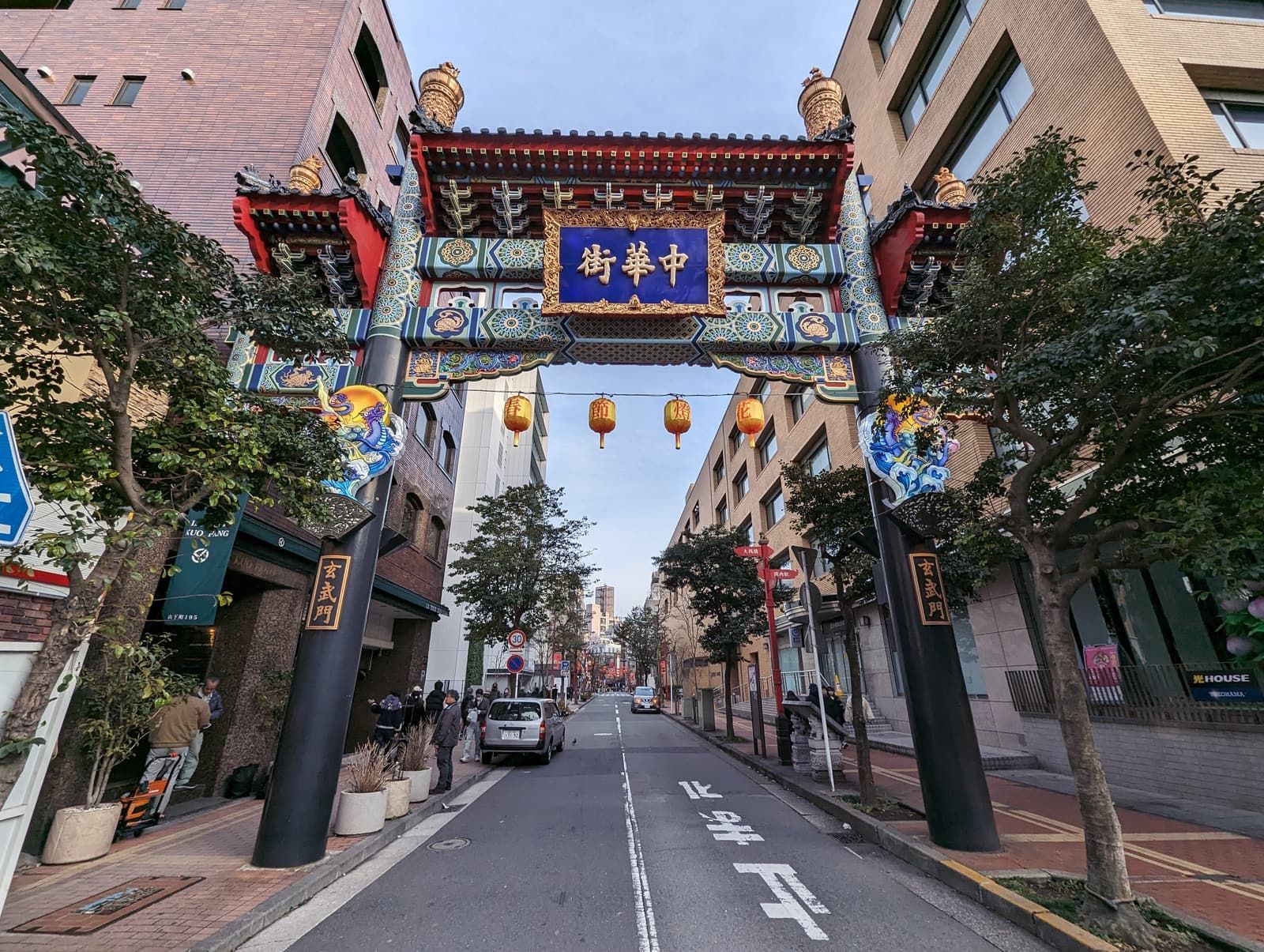
The layout. The area is roughly 500 m by 500 m, framed by four gates. The main street, Chukagai Odori, runs about 300 m from Zenrinmon Gate to the police box. Side streets such as Ichiba-dori and Kanteibyo-dori are packed with takeout counters too. One quirk worth knowing: the Chinatown grid sits at about 45 degrees to the surrounding streets, which the association itself says is why visitors get turned around. Use the gates as landmarks.
The gates. There are 10 decorated gates (pailou). The four main ones stand at the east, south, west and north corners and follow feng shui, each with its own guardian and color:
| Gate | Direction | Color | Useful because |
|---|---|---|---|
| Choyomon | East | Blue | The largest gate (13.5 m high); you pass through it from Motomachi-Chukagai Station and Yamashita Park |
| Suzakumon | South | Red | Closest to the Motomachi shopping street |
| Enpeimon | West | White | The second gate you pass coming from JR Ishikawacho Station |
| Genbumon | North | Black | Handiest for Yokohama Stadium |
Zenrinmon, on the main street, is the gate you’ll see in most photos. It was first built in 1955 and rebuilt in its current form in 1989.
Takeout vs sit-down. Most restaurants with a street-facing counter sell takeout from the front: buns from steamers, dumplings, sweets. Inside, the same building is often a full restaurant. Many restaurants also run all-you-can-eat (tabehodai) menus. In Yokohama Chinatown these are often order-style buffets: you order from a menu as many times as you like within a time limit, and dishes are cooked to order rather than laid out on a buffet counter. For example, Kocho’s official site describes its restaurant as an order-style all-you-can-eat specialist with 130 dishes, and the association’s listing for Yokohama Daihanten describes an order-style buffet of about 100 dishes including Peking duck and dim sum. Prices, time limits and drink rules vary by restaurant and day, so read the conditions before you sit down.
Payment. It varies shop by shop. The association’s shop listings show whether a shop accepts credit cards or PayPay, which tells you not everyone does. Carry some cash for small takeout counters.
Street food to try, by dish type
Shops change their menus and prices often, so this section describes the dishes, not a ranking. Where a shop is named, it’s because its own official page (or its listing on the Chinatown association’s site) describes it. Prices aren’t given here: most takeout prices are posted only at the counter.
Tip: the association’s Japanese website has a tag search (おしらべ) for takeout items, including steamed buns (肉まん), xiaolongbao (小籠包), pan-fried xiaolongbao (焼小籠包), sesame balls (ごま団子), egg tarts (エッグタルト), Peking duck (北京ダック), zongzi (ちまき) and Taiwanese fried chicken (炸鶏排). It’s a quick way to see which shops sell a given dish. There’s also an English guide map (PDF) with shop names and grid references.
Steamed buns (nikuman / butaman)
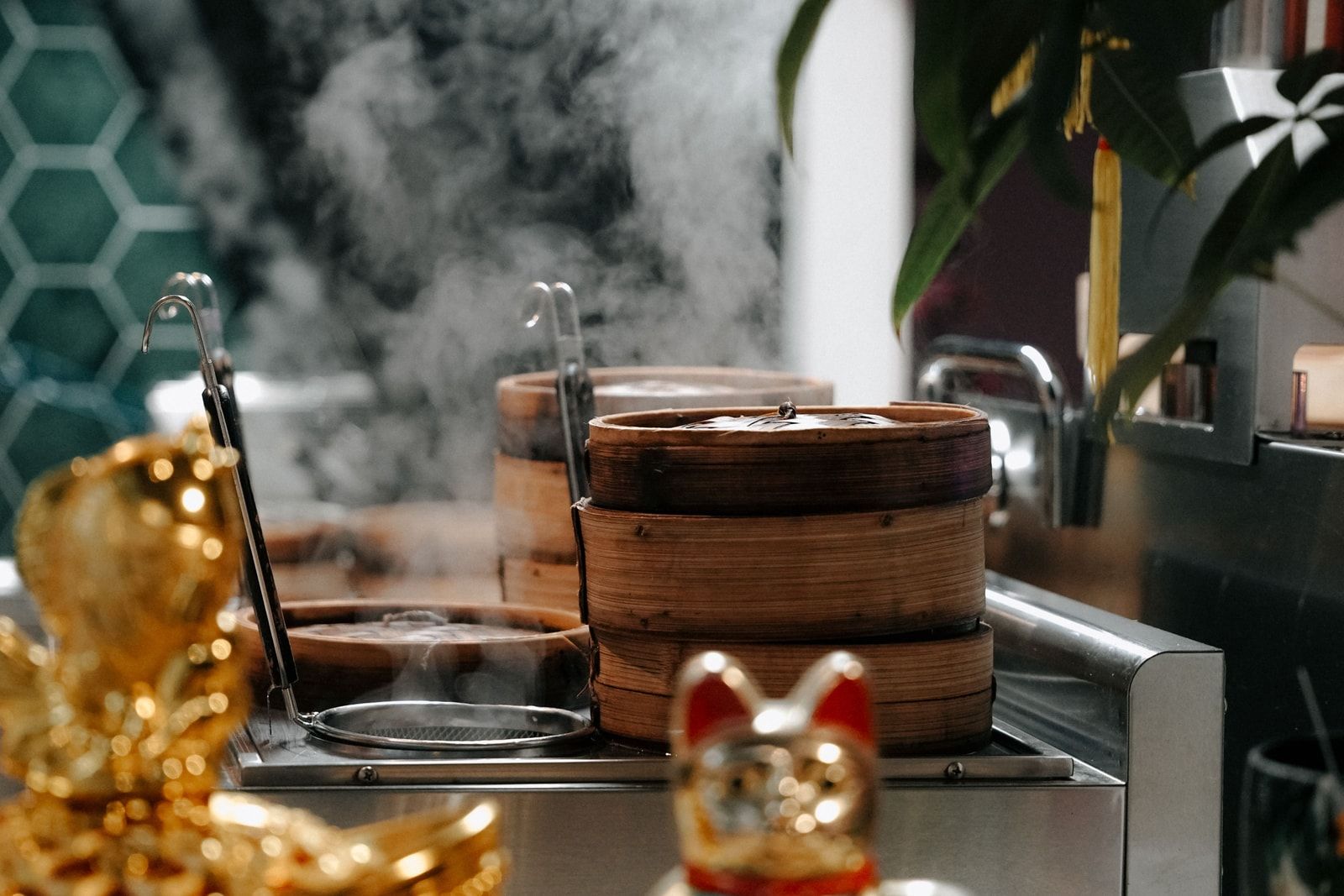
A soft wheat bun, steamed, with a filling of seasoned minced pork and vegetables. In Chinatown they’re kept hot in stacked steamers at the shop front and sold one at a time. Sizes range from bite-size to buns bigger than your hand, and many shops sell variations: red bean paste (anman), shark fin, curry, and character buns shaped like pandas or other animals.
- Edosei, founded in 1894 as a butcher in the old foreign settlement, says on its official site that its large Butaman started the trend of eating buns while strolling around Chinatown. The company gives its size as about 11 cm across and 250 g, with pork, crab, shrimp, bamboo shoots, cabbage and green onion in the filling. It has several shops in Chinatown.
- Kocho presents its pork buns as made by past winners of a Chinese cooking world championship, and lists several Chinatown shops on its official site. It notes that some prices were revised from mid-February 2026.
Xiaolongbao and pan-fried xiaolongbao
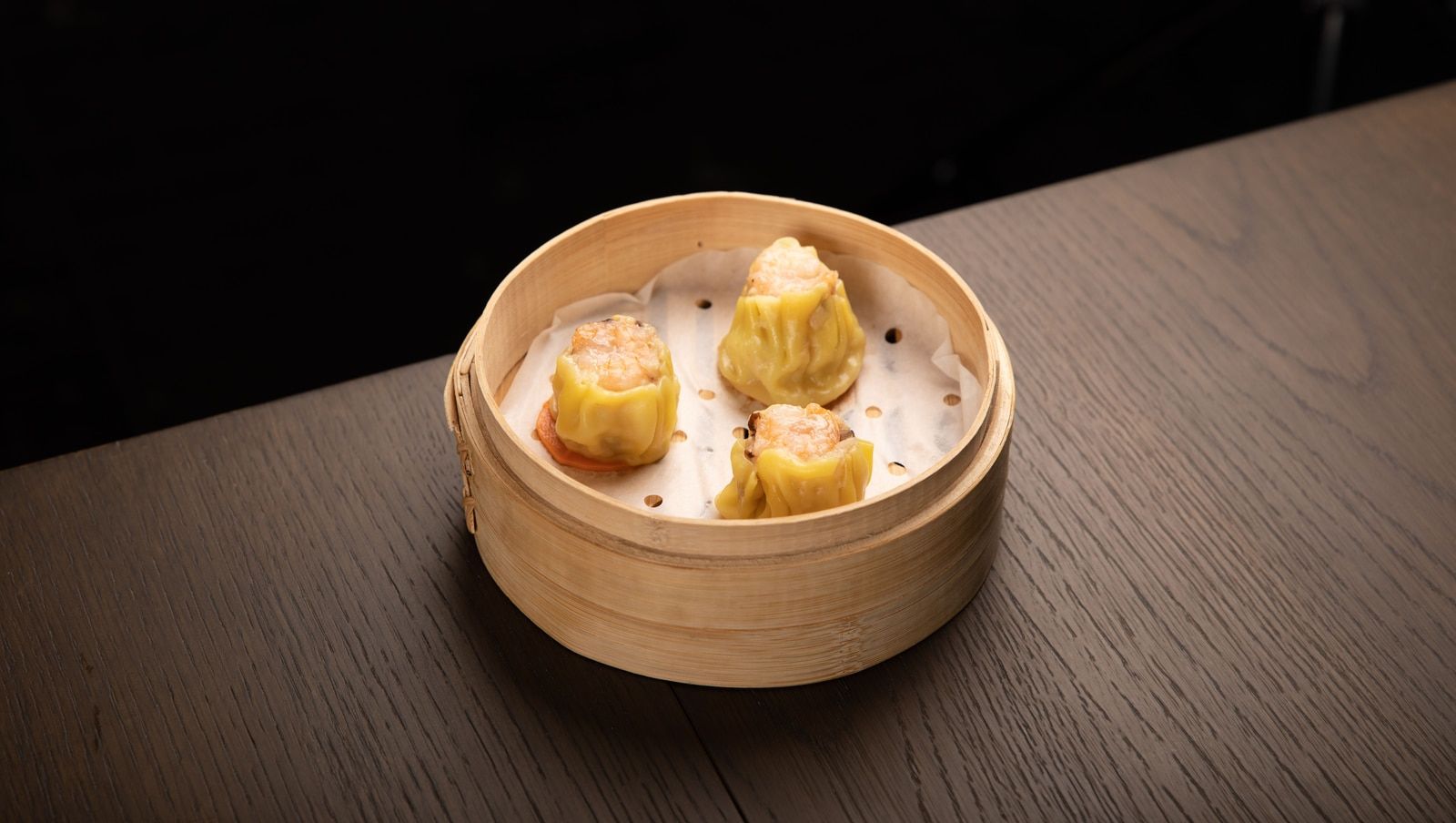
Xiaolongbao are small pleated dumplings, steamed in bamboo baskets, with pork filling and hot broth sealed inside. Pan-fried xiaolongbao (yaki-shoronpo, similar to Shanghai shengjian bao) are steamed and fried in a wide pan, so the bottom turns crisp.
Practical point: the broth inside is very hot. Bite a small hole and let it cool before eating, especially with the pan-fried kind, which is often handed over straight from the pan.
The association’s listing for Houtenkaku Xiaolongbao Specialty Store on the main street describes pan-fried xiaolongbao made and sold in front of customers, with weekend queues, and a restaurant on the 2nd and 3rd floors. Its listed hours are 11:00 a.m. to 10:00 p.m. daily (listing updated June 2026).
Other savory takeout
- Peking duck wraps: slices of roast duck with sauce and green onion in a thin pancake, sold as takeout at some counters.
- Zongzi (chimaki): sticky rice with fillings, wrapped in bamboo leaves and steamed.
- Taiwanese fried chicken (dajipai): a large, flat, breaded chicken cutlet.
Sweets
- Sesame balls: glutinous rice dough around sweet bean paste, coated in sesame seeds and deep-fried.
- Egg tarts: custard in a pastry shell, Hong Kong and Macau style. The association’s listing for Yokohama Daihanten mentions egg tarts made by an in-house pastry chef at its ground-floor shop, along with almond soft-serve and small mooncakes.
- Mooncakes: dense round pastries with sweet fillings such as bean paste or nuts, popular as souvenirs.
- Candied strawberries: fresh strawberries on a skewer, coated in a hard sugar shell. These are the food the association’s eating-while-walking rule is mainly about (see below).
- Roasted sweet chestnuts (amaguri): small Chinese chestnuts roasted in hot stones. According to the association, new-season chestnuts are on sale from about late September to late October.
Eating while walking: the official rules
In much of Japan, eating while walking is considered bad manners, but Chinatown is built around takeout. The Chinatown association posted its own request (June 2025), and it’s short and specific:
- Don’t eat skewered food while walking. Items like candied strawberries can cause serious injuries to your throat or face if you trip, and in narrow, crowded streets they can poke other people or stain their clothes.
- Stop in a safe place to eat. The association suggests Yamashitacho Park, a small park inside Chinatown.
- Don’t take over other shops’ fronts. Sitting down or standing in front of a shop you didn’t buy from blocks its customers. Eat in front of the shop that sold you the food (if there’s space) or move on.
The association’s slogan for this is “stand-still gourmet” (立ち止まりグルメ). Two more official points:
- Trash: the association has installed its own takeout trash bins and asks you to put takeout trash in them. Their locations are on a map linked from the association’s homepage. Public bins are otherwise rare in Japan, so keep a small bag with you.
- Bigger picnic spot: Yamashita Park, on the harbor, is 3 minutes on foot from Motomachi-Chukagai Station (exit 4) and free to enter.
How to avoid tourist traps
General advice, mostly based on the association’s own guidance:
- Buy chestnuts from a named, certified seller. The association runs a recommended-seller scheme for roasted chestnuts after complaints about some sellers’ manners. Certified booths display a plate; the criteria include the seller’s name and contact details on the bag, the weight printed on the bag, scales at the booth and gloves for handling. As of October 2026 it lists three certified booths: Yokohama Daihanten Otsubu Amaguri, and two Heichin Dai-Amaguri booths (Chinatown East Gate and main store). The association specifically warns about stalls with no shop name and sellers who push free samples too hard.
- Check the price before it’s bagged. Prices are posted at the counter; check the posted price and portion before you order, especially for anything sold by weight.
- Read buffet conditions first. Before entering an all-you-can-eat restaurant, check the time limit, whether drinks are included, and whether the price changes on weekends or for certain courses.
- Use the official map. The side streets have takeout counters too; the association’s English guide map and tag search show which shops sell what.
Budget: what you can calculate in advance
Transport is the part you can work out from official fares. From Shibuya (all fares as of October 2026):
- Tokyu Line Minatomirai Pass: 920 yen. It covers the round trip to Yokohama plus unlimited Minatomirai Line rides for the day. Buy it at a Tokyu ticket machine at Shibuya; Yokohama Station doesn’t sell it.
- IC card, round trip to Motomachi-Chukagai only: 533 yen each way, 1,066 yen total. The pass saves 146 yen.
Food is the variable part. Takeout prices are posted at each counter and most shops don’t publish them online, so we don’t quote them here. A simple way to plan: set a food budget before you go and check the posted price of each item as you buy. Yamashita Park and the harbor walk afterwards are free.
Who should do what
| You are… | Best plan |
|---|---|
| First visit, an hour or two | Walk the main street, then one side street; pick one bun, one dumpling item and one sweet |
| Hungry and want to sit down | An order-style all-you-can-eat lunch; check time limit and drink rules first |
| Traveling with kids | Smaller buns and sesame balls; eat in Yamashitacho Park or Yamashita Park |
| Short on time | Enter at Choyomon from Motomachi-Chukagai Station and stay on the main street |
| Want chestnuts as a souvenir | Buy only from a booth with the association’s certified-seller plate |
| On a tight budget | Minatomirai Pass from Shibuya, takeout only, picnic at Yamashita Park |
| Want context, not just food | Consider a guided food tour (see below) |
Getting there and nearby spots
Aim for Motomachi-Chukagai Station, the last stop on the Minatomirai Line, about 1 minute on foot from Chinatown through Choyomon Gate. Many Tokyu Toyoko Line trains from Shibuya run straight through in about 35 minutes; Fukutoshin Line through trains take about 43 minutes from Shinjuku-sanchome. JR Ishikawacho Station is about 5 minutes away on foot and Kannai Station about 7.
After eating, the waterfront is right there: Yamashita Park, the Red Brick Warehouse and the Minato Mirai skyline at night. For the full route, timings and fares from Shibuya, Shinjuku and Tokyo Station, see Yokohama day trip itinerary from Tokyo.
Rather go with a guide?
You don’t need a guide to eat in Chinatown: the streets are compact, food is sold over the counter, and you can point at what you want. A guided food tour can still make sense in some cases.
A guided food tour suits you if:
- You want the stories behind the dishes, the gates and the temples, in English.
- You have dietary restrictions (allergies, vegetarian, halal) and want someone to ask the shops for you.
- It’s your first time in Japan and you’d rather not navigate menus in Japanese.
Walking it yourself suits you if:
- You’re on a budget or want to set your own pace.
- You’re combining Chinatown with the rest of Yokohama in one afternoon.
- You already know what you want to eat.
What to check before booking: what’s included (number of tastings, drinks), whether dietary needs can be handled, the meeting point, group size, the language of the guide, and the cancellation policy.
Related guides
-
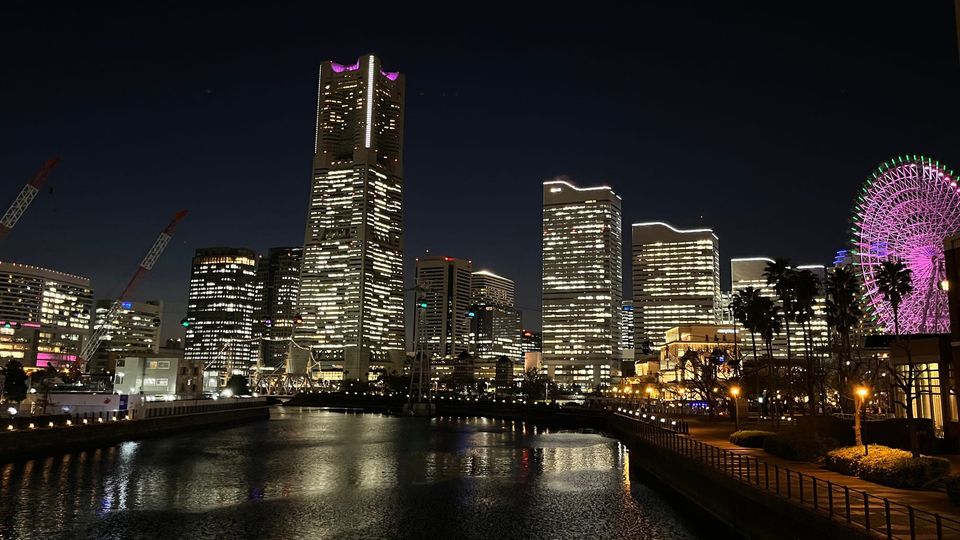
Photo: Justin Taylor / Wikimedia Commons (CC BY 2.0), cropped; displayed with a crop Yokohama Day Trip Itinerary from Tokyo: Afternoon to Night
Is Yokohama worth a day trip? A timed plan from Chinatown to Minato Mirai at night, a full-day version, and train fares from Shibuya: 920 yen round trip.
-

Photo: Bjorn Pierre / Pexels (Pexels License), displayed with a crop Kamakura vs Hakone vs Yokohama: Which Day Trip from Tokyo?
Kamakura, Hakone or Yokohama? Compare travel time, transport cost, what you see, best season and rainy-day backups, then jump to the full guide for each area.
FAQ
Can you eat while walking in Yokohama Chinatown?
Takeout food is a big part of Chinatown, but the Chinatown association asks visitors not to eat skewered foods, such as candied strawberries, while walking. Stop in a safe spot to eat them, for example Yamashitacho Park inside Chinatown, and don't sit or stand in front of shops you didn't buy from.
How do the all-you-can-eat restaurants in Yokohama Chinatown work?
Many are order-style buffets: instead of a self-service counter, you order dishes from a menu, as many times as you like within the time limit, and they're cooked to order. Time limits, prices and drink rules differ by restaurant, so check the menu and conditions before you sit down.
Where can I throw away trash in Yokohama Chinatown?
The Chinatown association has set up its own bins for takeout trash and asks visitors to use them. Their locations are shown on a map linked from the association's official website.
What is the nearest station to Yokohama Chinatown?
Motomachi-Chukagai Station on the Minatomirai Line, about 1 minute on foot. Many Tokyu Toyoko Line trains from Shibuya run through to it in about 35 minutes. JR Ishikawacho Station is about 5 minutes away on foot.
Sources
Prices and opening hours on this page were checked on each official site on the dates below and can change.
- Request about eating while walking (skewered foods, Yamashitacho Park, shop fronts) (Yokohama Chinatown Development Association, Japanese) (checked )
- Yokohama Chinatown official website: takeout trash bins notice and shop tag search (Yokohama Chinatown Development Association, Japanese) (checked )
- Q&A about Yokohama Chinatown: number of shops, area, main street length (Yokohama Chinatown Development Association, Japanese) (checked )
- About the gates (pailou) of Yokohama Chinatown (Yokohama Chinatown Development Association, Japanese) (checked )
- Recommended roasted chestnut sellers scheme (Yokohama Chinatown Development Association, Japanese) (checked )
- Yokohama Chinatown English guide map (Yokohama Chinatown Development Association, PDF) (checked )
- Shop listing: Houtenkaku Xiaolongbao Specialty Store (Yokohama Chinatown Development Association, Japanese) (checked )
- Shop listing: Yokohama Daihanten main store (Yokohama Chinatown Development Association, Japanese) (checked )
- About Edosei: history of the Butaman (Edosei, Japanese) (checked )
- Edosei Butaman: size and weight (Edosei official online shop, Japanese) (checked )
- Kocho: pork buns, dim sum, order-style all-you-can-eat restaurant (Kocho, Japanese) (checked )
- Yokohama Chinatown: shops, gates, temples, access (Yokohama City official tourism site, Japanese) (checked )
- Getting to Yokohama: travel times from central Tokyo (Yokohama Official Visitors' Guide) (checked )
- Minatomirai Line fares, 1-day ticket, IC cards and card tap payment (Yokohama Minatomirai Railway, Japanese) (checked )
- Minatomirai Line stops and travel times to Shibuya and Shinjuku-sanchome (Yokohama Minatomirai Railway, Japanese) (checked )
- Tokyu fares by distance; Shibuya to Yokohama 24.2 km (Tokyu, Japanese) (checked )
- Tokyu Line Minatomirai Pass (Tokyu, Japanese) (checked )
- Tokyu Line Minatomirai Pass prices by station (Tokyu, Japanese PDF) (checked )
- Yamashita Park: size and access (City of Yokohama, Japanese) (checked )